
Critical Fall Height
How Corkeen surfaces retain Critical Fall Height safety across years of use
As the years go by, Corkeen surfaces naturally evolve in appearance. The original hazelnut tones gradually soften, shifting toward a gray-brown finish that can appear more brown or more gray depending on environmental exposure, climate conditions, UV radiation, moisture levels, and usage intensity.
This is not a flaw. It is the expected and natural aging of cork, one that affects aesthetics, not performance.
Cork is a living, breathable material. When installed outdoors, it interacts with its environment, just like wood, stone, or soil. Through oxidation and UV exposure, the surface lightens over time, particularly in areas exposed to direct sun.
This transition from brown to gray is a visual reminder that the playground is alive, a place that’s been lived in, played on, and remembered.
It reflects the passage of time, just like the people who use it.
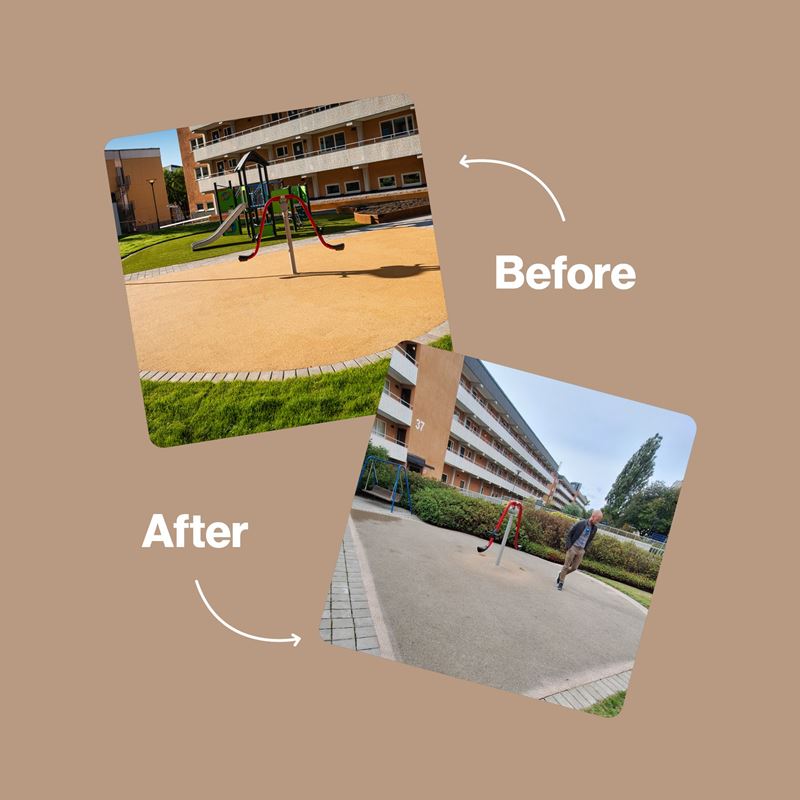
Color may change. Performance does not.
Across multiple audited Corkeen installations, including those exposed to harsh winters, tropical humidity, and intense sun, the systems continued to meet EN 1177 standards for Critical Fall Height (CFH), even after 3 to 5 years of use.

Corkeen was never meant to look brand new forever. It was made to evolve, like the trees it comes from.
As one generation plays, another arrives. The color may change, the surface may soften in tone, but the protection remains constant. That’s the true mark of durability: not resisting change, but aging with integrity.
How Corkeen surfaces retain Critical Fall Height safety across years of use

Built to Resist: How Corkeen Surfaces Withstand Daily Use and Abrasion

Protecting children through a patented cork system that sets the benchmark for safety and sustainability